WAND (Weather and Networked Data) is a world-leading decision-support tool developed through investment from CRDC, GRDC and commercial partner Goanna Ag. It provides cotton growers with real-time inversion monitoring and forecasting, helping them spray more safely, reduce drift risk, improve compliance, protect neighbouring crops and maximise available spray windows. As herbicide stewardship and spray regulations become increasingly important, WAND is becoming an essential tool for the Australian cotton industry.
Why WAND is important to the Australian cotton industry
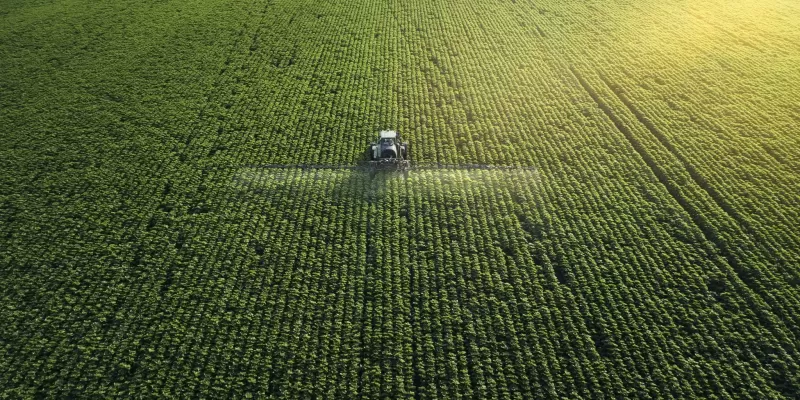
1. Protects cotton crops from spray drift. Spray drift remains one of the biggest risks facing cotton growers. Cotton is particularly sensitive to some herbicides, and drift damage can result in substantial yield and financial losses. WAND helps identify hazardous atmospheric conditions that can carry spray droplets long distances, reducing the likelihood of off-target damage.
2. Provides real-time inversion detection. WAND gives growers access to real-time weather information and forecasts that identify hazardous surface temperature inversions. These inversions are a major cause of spray drift but can be difficult to detect using traditional methods. WAND removes much of the guesswork by providing objective, science-based information.
3. Helps growers know when they can spray. Traditionally, growers often avoided spraying from before sunset until after sunrise because of the risk of inversions. WAND identifies when hazardous inversions are actually present, allowing operators to safely use additional spraying opportunities when conditions permit. This can significantly increase available spray windows.
4. Supports compliance and stewardship. Chemical labels and regulations prohibit spraying during hazardous inversion conditions. WAND helps growers meet these requirements by providing accurate weather data and alerts, supporting responsible pesticide use and improved industry stewardship.
5. Improves productivity and operational efficiency. With a network of more than 100 towers across cotton and grain regions of Queensland and New South Wales, WAND provides forecasts and updates every few minutes. This allows growers and contractors to better plan labour, machinery and spray operations, improving efficiency and reducing downtime.
SataCrop is a Cotton Australia and Precision Crop Technologies (PCT) initiative designed to highlight the location of cotton fields
In a nutshell, it's a simple but highly valuable risk management tool that helps growers, agronomists and spray operators know what's around them before spraying. This helps to protect crops from spray drift and supports responsible pesticide stewardship across farming regions. The platform is strongly supported by growers, with mapped cotton area reaching 77% of the total cotton area in 2023-24 and 63% in 2024-25.
Why SataCrop matters
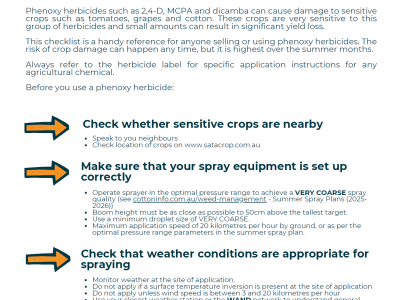
1. Reduces the risk of spray drift damage. Cotton is highly sensitive to certain herbicides, particularly phenoxy products such as 2,4-D. SataCrop allows growers to map the location of cotton fields and other sensitive crops so spray operators can identify nearby risks before spraying. This helps prevent costly crop damage from off-target herbicide movement.
2. Improves communication between growers and spray operators. The platform provides a shared map showing cotton fields, sensitive crops, bee sites and no-spray areas. This gives aerial and ground applicators greater awareness of what is nearby and helps them make informed spray decisions.
3. Supports industry stewardship. SataCrop is a practical example of the cotton industry's commitment to responsible chemical use. By helping applicators avoid off-target impacts, it supports good neighbour relations, protects the environment and helps maintain access to important crop protection products.
4. Protects industry reputation. Spray drift incidents can damage crops, create conflict between neighbouring landholders and attract regulatory scrutiny. By reducing the likelihood of these incidents, SataCrop helps maintain confidence in the cotton industry's farming practices.