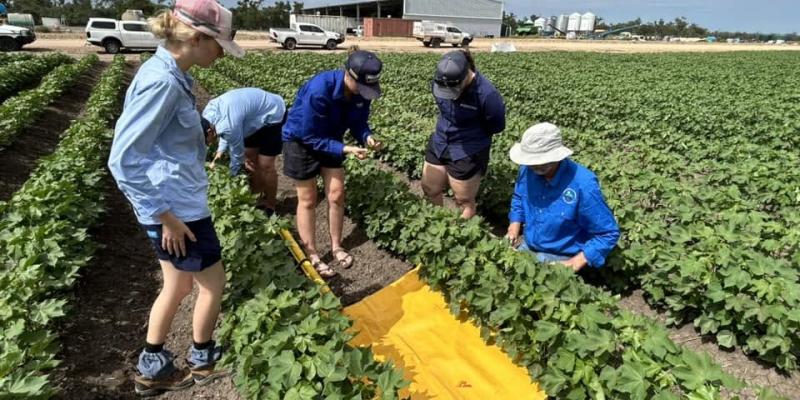
The aim of IPM is simple: keep pest levels below where they cause economic damage, while protecting your bottom line and your farm environment. Relying too heavily on insecticides can backfire and lead to resistance, flare-ups of secondary pests, loss of beneficial insects, and added environmental risk.
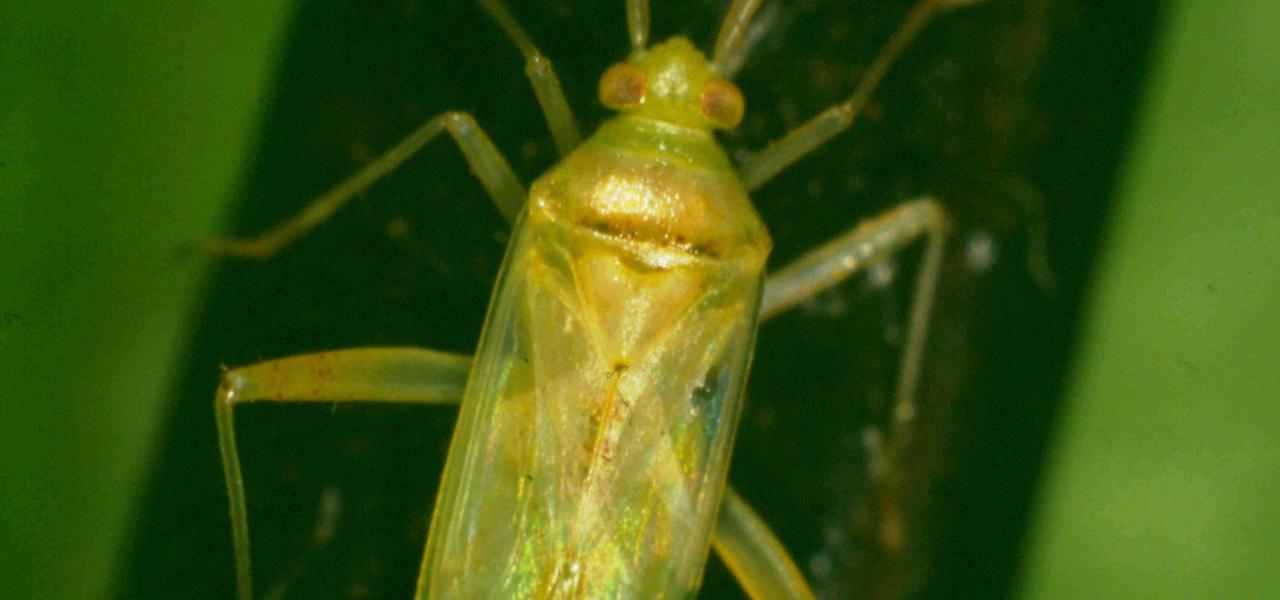
IPM is about working with what’s already in your paddock. By regularly checking your crop, using thresholds to guide decisions, and recognising the beneficial insects already doing the job for you, you can often spray less and get better control. Protecting these natural enemies, like predatory bugs, spiders and even birds, helps keep pest numbers in check over time.
Done well, IPM supports more stable pest control, cuts back on chemical use, lowers resistance risk and helps maintain both your profitability and the long-term health of your farm and the environment.
*Any information regarding pesticides or their use in this publication does not constitute a recommendation for that particular use by the authors, the author’s organisations or CRDC. All pesticide applications must accord with the currently registered label or permit for that particular pesticide, crop, pest and region.
Insecticide choice
Product choice can have a large impact on your IPM strategy for the remainder of the season. Some insecticides have very little impact on beneficial insects, while others are highly disruptive.
When selecting a pest control option, follow the Insecticide Resistance Management Strategy (to avoid resistance), how effective they are on the pest, and their risk and selectivity to the beneficial population. Information on the impact of insecticides and miticides on beneficials is available in the insects chapter of the Cotton Pest Management Guide.
An increase in non-target pest populations such as aphid, mite and whitefly may follow insecticide applications if beneficial populations are disrupted. The use of reduced rates of synthetic insecticides mixed with salt or spray oil can in some instances provide greater selectivity and better efficacy.
Know your enemy
Knowing the biology, behaviour and ecology of your pests and beneficials allows you to make well-informed pest management decisions.
Rotation crops
Consequences for pest management should be factored into crop selection decisions. Some rotation crops can increase pest numbers that could then migrate into nearby cotton crops. Risk can be managed in terms of timing and location of crops.
Field selection
Before planting cotton, consider the proximity to sensitive areas (e.g. buildings and watercourses), pest hosts and beneficial habitats.
Weed management
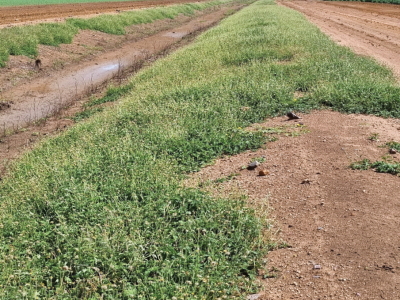
Many cotton pests rely on volunteer cotton and weed hosts prior to migrating into cotton fields. For pest suppression leading into each cotton season, weeds need to be managed in fallow fields, along field borders and irrigation channels, and in perennial vegetation and pastures.
Grow a healthy crop
Vigorous, healthy, early growth enables the crop to recover in many situations from early season pest damage. Good seedbed preparation, variety choice and planting at the right time can help achieve good cotton establishment and early growth.
Working with your neighbours
Insects live in landscapes, not on individual farms. Management strategies used on one farm can affect surrounding farms. Sharing strategies and coordinating tactics with neighbouring growers can increase success in implementing IPM. This is an approach known as Area Wide Management.
Valuable vegetation
Healthy perennial native vegetation provides habitat for beneficial species that can play a significant role in pest suppression.
- Know what’s going on in your crop: regularly monitor crop growth, insect populations and insect damage
- Follow the cotton industry’s Insecticide Resistance Management Strategy (IRMS) when insecticide is used (see the Cotton Pest Management Guide)
- Conserve beneficial insects in your crop by avoiding ‘insurance sprays’ and choosing a selective pesticide option if necessary
- Minimise the impact of insecticides on bees
- Think beyond the crop – perennial native vegetation is an important refuge for natural enemies.
- Control weeds in your crop and in the surrounding landscape to reduce potential insect pest outbreaks.
- Remove cotton volunteers and ratoon plants from all cropping and non-cropping areas to reduce the carryover of pests and diseases and the development of pesticide resistance.
- Work as part of a team with others in your farm business and with neighbouring farms to keep people safe, protect your environment and get the greatest value out of the resources you invest in insect management.
For more information on insect management visit the myBMP Integrated Pest Management module.
BeeConnected
Cotton farms can be a high-risk environment for bees, particularly during long periods of dry weather. As pollen in native vegetation becomes increasingly scarce, cotton becomes one of the most attractive sources of pollen and nectar – and honeybees can travel for up to seven kilometres to access it. Bees are particularly susceptible to many of the insecticides still used in cotton production. Good communication between growers and beekeepers is critical in reducing unintended exposure of bees to any products that may have a potentially negative consequence to bee health.
To help growers be aware of hives near their farms, CropLife Australia, and the Australian Honey Bee Industry Council run BeeConnected - a free website and mobile app to allow all farmers, including cotton growers, and beekeepers to notify each other of their crop protection activities and hive locations. The effectiveness of BeeConnected is greatest when as many growers and beekeepers as possible use the services.Beekeepers can log the location of beehives, and farmers and spray contractors can log the location of activities involving the use of crop protection products.