Biotechnology
Since the introduction of the first biotechnology trait (Ingard®) in Australian cotton in 1996, biotechnology has become a central component for cotton production. Today virtually all cotton planted in Australia contained at least one biotech trait (either Bt or herbicide traits).
Currently there are two broad classes of cotton biotechnology traits which are approved and available in Australian cotton varieties providing either insect protection or herbicide tolerance, or in varieties which are ‘stacked’ with a combination of both traits.
Bt cotton
Bollgard® 3 cotton, a third generation of Bt cotton, was released in 2016/17, expressing three proteins (Cry1Ac, Cry2Ab and Vip3a) providing excellent control of Helicoverpa. The stack of toxins each with a different mode of action provides an effective mechanism for reducing the likelihood of resistance when combined with other tactics as part of the Bollgard® resistance management plan (RMP).
The growing of transgenic Bt varieties has allowed Australian cotton growers to reduce insecticide use by more than 90 percent. However, the potential development of resistance is an ever present threat that requires effective technology stewardship to ensure technology longevity.
Screening has revealed that baseline frequencies of resistance in the Helicoverpa population to the proteins expressed in Bt cotton (Cry1Ac, Cry2Ab and Vip3a) were higher than originally anticipated. The continued efficacy of Bt cotton is therefore dependent on the effective implementation of the Resistance Management Plan (RMP).
The RMP for Bollgard 3 is based around five key elements that impose limitations and requirements for management. These are the mandatory growing of refuges, control of volunteer and ratoon plants, a defined planting window, restrictions on the use of foliar Bt, and pupae destruction. The combined interaction of all these elements effectively slows the evolution of resistance.
Planting windows
The aim of planting windows is to confine crop development and maturity to limit the number of generations of Helicoverpa spp exposed to Bt cotton each season, restricting the selection pressure over time.
Imposing a start and end to planting date is especially important in warmer or tropical regions where pupae do not necessarily enter diapause over the winter and where there is no climatic restriction for when sowing could theoretically occur.
Mandatory refuges
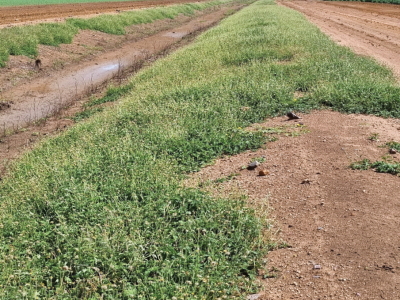
Refuge crops are planted to generate significant numbers of susceptible moths that have not been exposed to the Bt proteins in Bt cotton. Essentially these areas provide a nursery for Helicoverpa.
The options for irrigated Bollgard 3 refuges are 100 percent sprayed conventional cotton, 5 percent unsprayed conventional cotton or 2.5 percent pigeon pea (relative to the area of Bollgard 3 cotton grown). Some variations on refuge requirements exist for central Queensland to accommodate the fact that cotton can be sown throughout the 5 month planting window. In recent years almost 70 percent of refuges have consisted of pigeon pea.
Refuge crops must receive adequate nutrition, irrigation, and weed and pest management (excluding Helicoverpa sprays) so that they remain attractive to Helicoverpa, attracting females to lay eggs in the refuge.
Volunteer and ratoon control
The presence of volunteers within a refuge diminishes the value of a refuge, as some of the moths emerging from that refuge have had exposure to the Bt proteins, potentially leading to an increase in the frequency of resistant individuals in the population.
The good farm hygiene practice of removing all volunteers in and around cropping areas is not only important in removing disease and pest carryover hosts, but also in reducing the resistance risk to Bt technologies.
Pupae destruction
Helicoverpa larvae enter a diapause phase (hibernation) in the soil as temperatures begin to cool and day length decreases in early autumn, allowing the pest to survive in winter months.
Cultivation between seasons, during the dormancy phase, is an effective way of preventing diapausing pupae emerging as moths that may be carrying resistance alleles from the previous season. This prevents them from contributing offspring to the population of the following year.
In Central QLD, due to the warmer temperatures and smaller changes in day length, Helicoverpa pupae produced late in the season are less likely to go into diapause, making pupae busting less effective. Late season trap crops are used as an alternative and are timed to be at their most attractive after cotton has cut out. Once the cotton has been harvested, the trap crops are destroyed and cultivated to kill the remaining larvae and pupae.
In southern regions, the use of attract and kill technology (Magnet®) to target the last generation of moths that would oviposit eggs that would hatch to become the last larvae of the season that go on to enter diapause has also become an option within the RMP. This has been done acknowledging the difficulties encountered in some seasons with implementing pupae busting due to wet winter conditions. Consult the latest advice from Bayer for more information.
Evaluating the effectiveness of the RMP
Bayer Australia conducts a monitoring program of field populations of moths for resistance to Cry1Ac, Cry2Ab and Vip3a proteins. The results are used to make decisions about the need for modifications to the RMP from one season to the next to manage resistance.