Access research, guides, and resources for cotton growers
Showing 1-10 of 122 results
Showing 1-10 of 122 results
30 July 2026
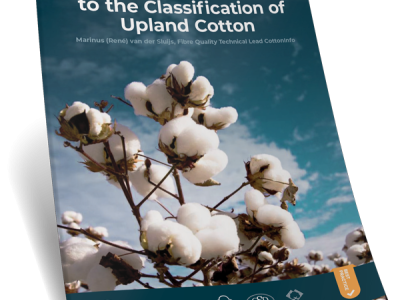
This guide aims to provide an overview on cotton classification and covers details on factors that can impact fibre quality, how fibre quality properties are measured and what the requirements are in terms of laboratory layout and practices.
26 June 2026
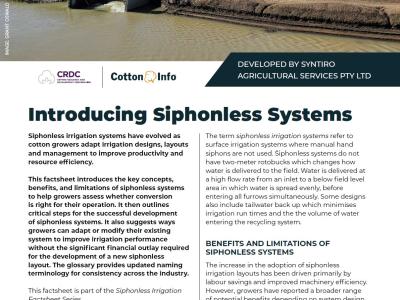
Siphonless irrigation systems have evolved as cotton growers adapt irrigation designs, layouts and management to improve productivity and resource efficiency.
26 June 2026
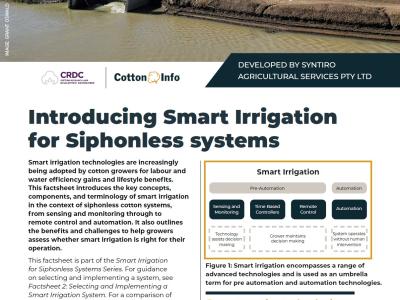
Smart irrigation technologies are increasingly being adopted by cotton growers for labour and water efficiency gains and lifestyle benefits.
24 June 2026
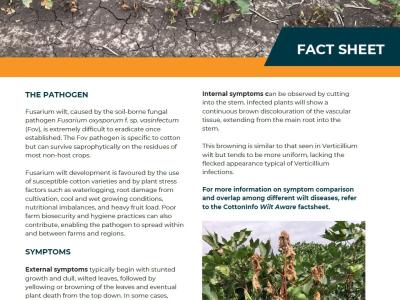
Fusarium wilt is caused by the soil-borne fungal pathogen Fusarium oxysporum f. sp vasinfectum (Fov). Symptoms are often associated with plant stress, including water-logging, root damage and unfavourable growing conditions.
23 June 2026
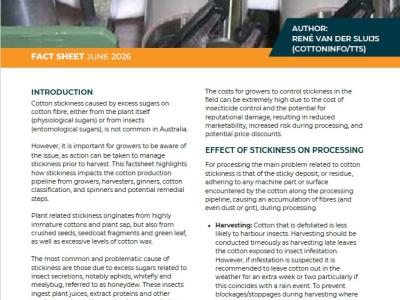
Cotton stickiness caused by excess sugars on cotton fibre, either from the plant itself (physiological sugars) or from insects (entomological sugars).
22 June 2026
The Winter 2026 edition of Spotlight focuses on how Australia’s cotton industry is managing risk on farm and building the capability to deal with the challenges and opportunities ahead.

22 June 2026
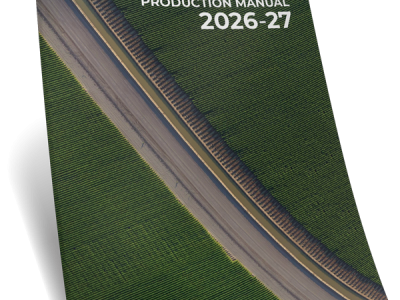
The Australian Cotton Production Manual is published by CRDC and CottonInfo and is updated to incorporate the latest research and consistent improvements in industry best practice.
25 May 2026
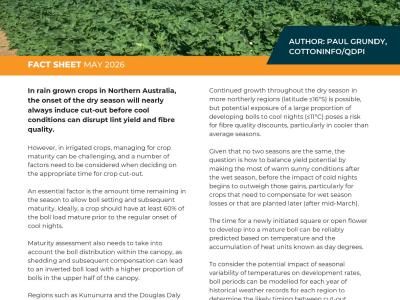
This fact sheet includes a table to assist growers and consultants in Northern Australia to select a desired crop maturity date and then manage for cut-out accordingly.
30 April 2026
Verticillium wilt is a soil‑borne disease that can cause significant cotton yield losses, particularly under cool, wet conditions and in later‑maturing crops. It is widespread across NSW and parts of Queensland and can be difficult to diagnose in the field.
11 December 2025